Last updated: October 6, 2026
Planning note 7 for neighborhood property planning should connect timing choices to a measured area, a labeled photograph, or a documented owner priority. Keep any condition not yet inspected as an open item, and state the next check before it changes the written plan.
Landscape planning considerations
For a Albuquerque property, anchor work to local growth — high-desert calendar check means starting with observed conditions rather than a packaged answer. In this market, alkaline New Mexico soil where caliche layers are common below the surface. Use it as a boundary for the scope, then verify the controller, soil and planting area before committing materials.
Landscape planning considerations
The useful question in Albuquerque is not whether an upgrade sounds attractive, but what evidence supports it. In this market, warm-season seed belongs in the May 15–August 1 window while cool-season seed has an August 15–September 15 window; warm-season turf can be dormant at least five months. The written plan should state which observation led to each proposed action and which condition remains unknown.
Landscape planning considerations
This decision changes when the actual exposure, access and irrigation layout are written down. In this market, tall fescue, Kentucky bluegrass and perennial ryegrass for cool-season use; bermudagrass, buffalograss and zoysiagrass for warm-season tradeoffs. That fact belongs beside the site measurements so a recommendation can be tested instead of assumed.
What USDA zone should an Albuquerque landscaping calendar use?
Use USDA zone 7b. It narrows which plants make sense, and it’s the right first filter for a yearly plan. It doesn’t replace a property-specific review of drainage, access and maintenance, though. Keep the unknowns visible on the calendar until the property has actually been inspected, then firm up the work that depends on them.
A defensible high-desert plan keeps the unknowns visible until the property is inspected. In this market, USDA zone 7b. It narrows the options, but it does not replace a property-specific drainage, access and maintenance review.
Landscape planning considerations
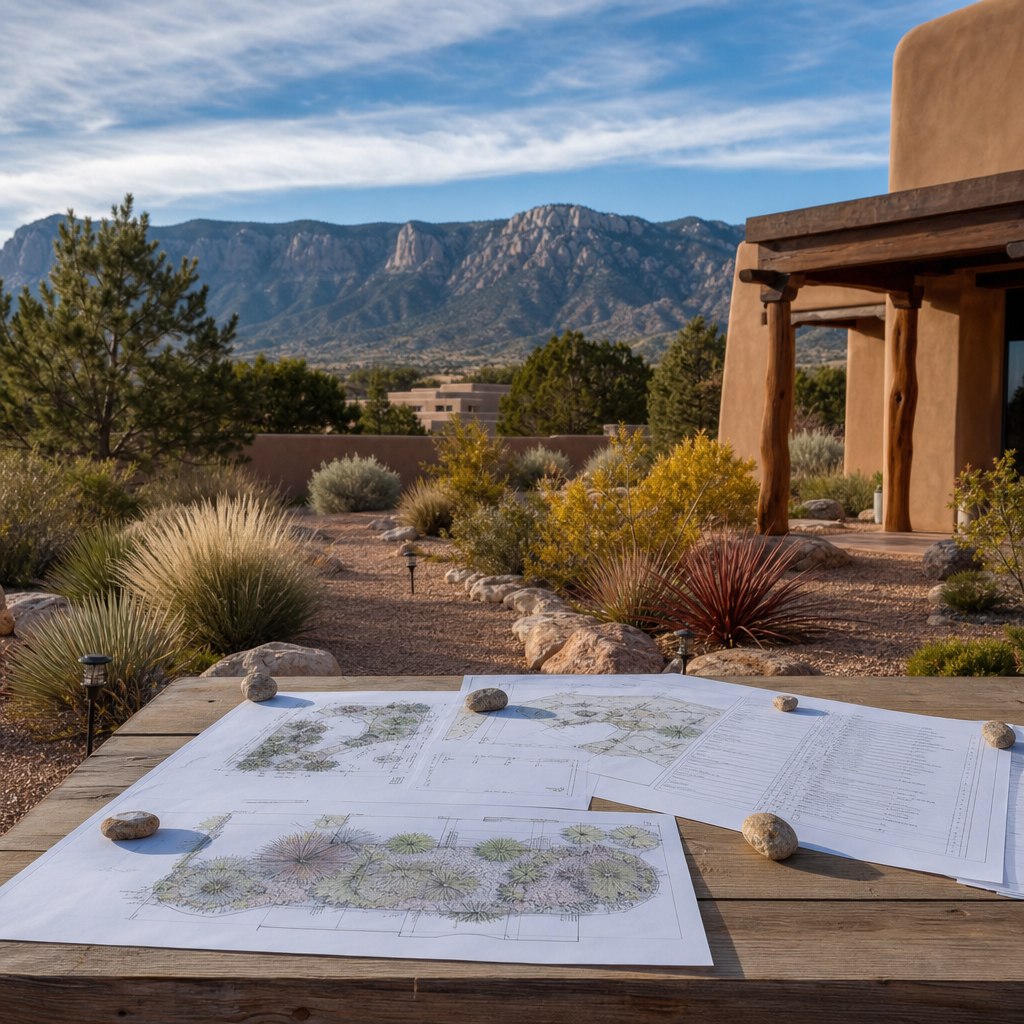
Photograph the Albuquerque irrigation valves, each spray boundary, the sun and shade pattern, and any place where water stalls or leaves the yard. Add a probe note for every bed or trench where caliche could change excavation. On the same sheet, label existing turf as cool-season, warm-season or unknown; record the owner’s tolerance for winter dormancy; and name the decision that must be made before the next seeding window. This high-desert record prevents a smooth surface, a green week or a generic controller setting from standing in for site evidence. For this calendar page, circle the observation that would change the next decision and name who will verify it.
File the dated irrigation sketch, caliche probe notes and seeding decision with the Albuquerque scope; a high-desert observation overrides a generic recommendation. For this calendar decision, the current authority and photographed property condition control.
Planning note 8 for neighborhood property planning should connect timing choices to a measured area, a labeled photograph, or a documented owner priority. Keep any condition not yet inspected as an open item, and state the next check before it changes the written plan.
Landscape planning considerations
Planning note 6 for neighborhood property planning should connect landscape guide 6 to a measured area, a labeled photograph, or a documented owner priority. Keep any condition not yet inspected as an open item, and state the next check before it changes the written plan.